
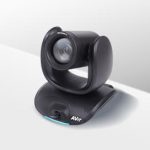
 USB Video Conferencing
Professional AV Knowledge Base
GLOSSARY OF TECHNICAL TERMS
Professional reference guide covering projection systems, display technologies, digital interfaces, AV integration standards and modern visualization technologies used in enterprise, education and professional environments.
50+
Terms Updated
2026
Standards Revision
4K/8K
Modern Formats
HDMI 2.1
Latest Interfaces
A
Active Matrix
Term used to describe LCD Displays which have micro-transistors that "open" and "close" each pixel, providing fast response times and high color contrast.
Active Matrix TFT
The most common type of LCD used in laptops, flat-panel displays, and digital projectors. A typical active matrix TFT (Thin Film Transistor) display is a single panel of LCD glass that controls all three primary colors. TFT displays are noted for their quick response time and ability to display full-motion video and animations without image ghosting. Modern iterations include IPS and VA panels with wide 178° viewing angles.
Additive Color Mixture
An ordinary color mixture process used in digital displays and data/video projectors. When mixing Red, Green, and Blue (RGB) light components with the same saturation, white light appears. The signal transmission historically happened via split RGB shielded cables, now superseded by digital interfaces like HDMI and DisplayPort.
AFS (Slide Projectors)
Selective Auto Focus. Corrects blurring fast and automatically. This function can be disengaged in a number of legacy slide projection devices.
AGP-bus (Legacy)
Acronym for "Accelerated Graphics Port". Along with ISA, EISA, Microchannel, Local Bus, and PCI, this was a dedicated port/bus in PCs designed to make 3D graphics faster and more realistic. The AGP-bus is now obsolete, completely replaced by PCI Express (PCIe).
ALIS
"Alternate Lighting of Surfaces". A legacy technology for Plasma Displays designed to improve image quality by digitally doubling the scan lines.
ANSI Lumens
A standard for measuring light output (brightness) used to compare digital projectors, established by the American National Standards Institute (ANSI). To determine the value, an area of 1m² on a screen is divided into 9 equally sized rectangles. The mathematical average of the light intensity in the center of each area equals the ANSI lumens value.
While ANSI lumens provide an "apples to apples" baseline, perceived brightness can vary depending on the light source (Halogen, Metal-Halide, LED, or Laser), contrast ratios, and the underlying display technology (LCD vs. DLP).
While ANSI lumens provide an "apples to apples" baseline, perceived brightness can vary depending on the light source (Halogen, Metal-Halide, LED, or Laser), contrast ratios, and the underlying display technology (LCD vs. DLP).
Anti Jam System (Slide Projectors)
A mechanical safety feature that prevents jamming or damaging of slides in a slide duct. To avoid heat damage, the slide transport is disengaged while the cooling fan continues to run.
Aperture
A measurement of the size of the lens opening, alterable in small steps (f-stops). The higher the aperture value (f-number), the smaller the opening, meaning less light enters the lens or camera sensor.
Artifact
A visual or audible flaw in a digital signal resulting from aggressive compression or faulty digitization. Visible artifacts include pixelation, macroblocking, color banding, or flickering. In audio signals, artifacts manifest as ambient noise, chirping, or clicking.
Aspect Ratio
The relationship between the width of an image and its height.
- 4:3: Standard format for early television and classic computer video formats (e.g., 640x480, 1024x768).
- 16:9: The universal standard for HDTV, modern monitors, and digital signage.
- 16:10 & 21:9: Modern ultra-wide formats frequently used in professional displays, productive laptops, and collaborative corporate environments.
- 5:4: Used by legacy SXGA (1280x1024) monitors.
- 3:2: Standard format for 35mm slides and photography.
ATA Rated Case
A heavy-duty transport case certified strong enough to be shipped by common freight carriers (UPS, FedEx, airlines). Most ATA rated cases comply with Air Transport Association guidelines and are recognized by their metal-reinforced corners, recessed handles, and robust plywood/aluminum build (often referred to as "Anvil cases").
Auto Balance
An automated system for detecting imbalances in the white and black areas of an image, correcting the levels of the red, green, and blue signals as needed.
Auto Setup / Auto Synch
A smart feature where a projector or monitor automatically recognizes the input source, resolution, and refresh rate, adjusting its internal alignment parameters instantly.
Autotimer (Slide Projectors)
A legacy presentation function allowing automated slide changes by pre-defining times for cross-fading, typically adjustable in steps from 1 to 60 seconds.
B
Back Room Projector
A projector equipped with a "long-throw" lens designed to be operated from the far back of a room, such as a dedicated projection booth, balcony, or the rear of an auditorium.
Backlit
Refers to hand-held remote controls or hardware control panels with illuminated buttons. This is a major asset when operating equipment in dark presentation rooms or home theaters.
Bandwidth
The range of frequencies (expressed in Hertz) required to transmit an electronic signal without degradation, defined as the difference between the upper and lower limiting frequencies of a band.
Barrel Distortion
An optical lens aberration where the straight margins of a projected image curve outwards (convex shape). It is typically caused by lens geometry flaws and is the opposite of pincushion distortion.
Blanking
The process of shading or temporarily turning off a portion of the display or data stream during a projection sequence.
Bluetooth
A short-range wireless data transmission technology allowing diverse components from different manufacturers to connect seamlessly into low-power wireless personal area networks (WPAN).
BNC (Bayonet Neill–Concelman)
A professional, high-retention RF connector featuring a secure bayonet locking shell. Video workstations historically used 5-connector BNC cables to transmit separate signals for Red, Green, Blue, Horizontal Sync, and Vertical Sync (RGBHV).
Brightness
The attribute of visual perception according to which an area appears to emit more or less light. In professional technical setups, Luminance is the recommended photoelectric quantity used to measure this attribute precisely.
Burn-in
An unwanted effect where a static image remains permanently latent or visible as a ghost image even when the display is switched off. This occurs due to uneven degradation of pixel compounds (historically common in CRT and Plasma displays; still monitored in modern OLED tech).
C
Carry-on Case
A compact projector travel case designed to fit within standard airline overhead bins or underneath passenger seats, preventing the delicate optical alignment of portable projectors from being damaged in cargo hold luggage.
CCD (Charge-Coupled Device)
An analog shift-register image sensor containing an array of linked, light-sensitive capacitors. Primarily used as the primary image sensor in legacy video cameras, high-end optical scanners, and early digital cameras.
CE Mark
A mandatory conformity marking required for electrical and electronic goods sold within the European Economic Area (EEA), certifying compliance with electromagnetic compatibility (EMC) and safety directives.
Chromatic Aberration
An optical lens defect caused by the lens failing to focus all wavelengths of color on the exact same focal point. This results in unwanted color fringes or halos (often purple or green) along high-contrast edges in the image.
Chromaticity
An objective specification of the quality of a color regardless of its luminance, uniquely determined by its dominant wavelength (hue) and purity (saturation).
Chrominance
The color portion of a video signal, encompassing both hue and saturation info. It operates alongside luminance (brightness) but the two terms are entirely separate.
Cinch / RCA Connector
A ubiquitous standard plug and jack style used primarily to transmit analog audio and video signals in consumer electronics.
Cinch Connector Color Coding
Standardized colors used for consumer AV cables: Red (Right Audio Channel), White/Black (Left Audio Channel), and Yellow (Composite Video).
Coated Optics
Microscopic chemical layers applied to high-quality glass lenses to minimize light reflection back toward the lamp and reduce ambient light scattering. Quality lens coatings can increase overall optical brightness by 15% or more.
Color Dynamics
A descriptive term for a display's dynamic range and contrast capability, yielding "the whitest whites and deepest blacks." High color dynamics translate to rich, punchy colors and clear shadow definition.
Color Temperature
A method of measuring the color characteristic of light emitted by a source, expressed in Kelvin (K). Low temperatures (around 3000K) represent warm, yellowish-red light, while high temperatures (6000K–10000K) signify cool, bluish-white light.
Compact Flash Card (Legacy)
An early mass-storage flash memory format widely used for storing data and media for PC-free mobile presentations in legacy media players.
Component Video Signal (YUV)
A high-quality analog video interface where the signal is split into three separate channels: one for luminance/brightness (Y) and two for color differences (U/V or Pb/Pr). It offers significantly higher fidelity than S-Video or Composite connections.
Compressed Resolution
The capacity of a display or projector to accept an incoming high-resolution signal and digitally scale it down to fit its native pixel matrix. The visual result depends entirely on the intelligence of the scaling algorithms.
Compressed SVGA
The process of scaling an 800x600 (SVGA) signal down to display on a native 640x480 (VGA) display panel, resulting in a complete layout view but with a minor sacrifice in text sharpness due to pixel interpolation.
Compressed SXGA
The process allowing native XGA (1024x768) projectors to accept and scale down high-end 1280x1024 workstation signals, commonly used in legacy engineering, medical, and scientific visualization fields.
Compressed XGA
The capability of an SVGA projector to downscale a 1024x768 (XGA) resolution signal. The quality of this specific interpolation was historically a key purchasing factor during the industry transition from SVGA to XGA source devices.
Contrast Ratio
The ratio between the luminance of the brightest white and the darkest black that a system can produce. Higher contrast ratios yield better image depth. Measured in two ways:
- 1. Full On/Off: Measured in a completely dark environment between a solid white and a solid black screen. It ignores internal lens light refraction and yields high numbers.
- 2. ANSI Contrast: Measured using a 16-field black-and-white checkerboard pattern. This represents real-world performance and results in a lower, more realistic numerical score.
Convergence
The precise physical alignment of the primary color paths (Red, Green, Blue) in a multi-panel or multi-valve projection setup. A convergence error causes colored margins or color fringing around text and sharp borders, most noticeably near the corners of the screen.
CRT Projectors (Legacy)
Heavy, three-tube (RGB) analog cathode-ray tube projectors meant for permanent ceiling installation. They are now completely obsolete, replaced by high-brightness solid-state digital projectors.
Cushion Distortion (Pincushion)
A lens aberration where horizontal and vertical lines bow inwards toward the center of the screen, creating an effect resembling a pin-cushion. It is the direct opposite of barrel distortion.
D
D-ILA (Direct-Drive Image Light Amplifier)
A proprietary reflective Liquid Crystal on Silicon (LCOS) technology developed by JVC, known for delivering high native contrast ratios and an unnoticeable pixel structure.
Daylight
Natural sunlight, typically quantified in lighting design as having a crisp, cool color temperature ranging from 5400K to 6000K.
dB (Decibel)
A logarithmic unit used to express the ratio of two values of a physical quantity, such as acoustic power, audio signals, or electrical voltage.
Diagonal Screen Size
The standard method of calculating display or projection size by measuring from one corner of the active screen area to the opposite corner. For a standard 4:3 aspect ratio, a screen measuring 3ft by 4ft yields an exact 5ft diagonal.
Dichroic
An optical filter or mirror coated with microscopic layers that selectively reflect certain wavelengths (colors) of the light spectrum while allowing all other wavelengths to pass straight through.
Dichroic Mirror Technology (Slide Projectors)
An optical design where a specialized reflector absorbs damaging heat radiation (infrared light) from the projection lamp while reflecting visible light through the slide, protecting delicate film from melting.
Diffuse Screen
A projection screen material engineered to scatter incident light evenly in all directions. It offers wide viewing angles (typically 45° to 60° off-center) and a balanced luminance gain factor.
Digital Light Processing (DLP)
A display technology developed by Texas Instruments (TI). It relies on a semiconductor chip called a Digital Micromirror Device (DMD) covered in hundreds of thousands of microscopic aluminum mirrors mounted on electrostatic hinges. These mirrors tilt thousands of times per second to direct light either toward the lens (on) or away from it (off).
Dissolve (Slide Projectors)
A smooth transition technique where one projected image fades out while a second overlapping image simultaneously fades in by modulating lamp brightness.
Distortion
An optical aberration common in wide-range zoom lenses, resulting in visible pincushion or barrel shape anomalies at extreme focal limits.
Distribution Amplifier
An active electronic device used to boost and split AV signals over long distances, preventing signal degradation, noise interference, or sync drops when running video lines to ceiling-mounted equipment.
DMD / DLP Chip
The actual silicon chip at the heart of a DLP system. Color is traditionally generated by a high-speed rotating color filter wheel synchronized with the mirror movements, though modern setups utilize separate RGB LED or solid-state Laser light arrays.
DRIT
"Digital Realized Interpolation Technology". A proprietary digital image scaling and compression algorithm developed by Sanyo for full-format image optimization.
Dual Scan Passive Matrix (Legacy)
An early LCD technology where a passive matrix screen was split into top and bottom zones controlled simultaneously. While faster than early single-scan screens, it suffered from slow response times, ghosting, and poor contrast, and is now entirely obsolete.
DVD (Digital Versatile Disc)
An optical disc storage format capable of storing high-capacity digital files, notably high-quality MPEG-2 video.
DVI (Digital Visual Interface)
A digital interface standard designed to transmit uncompressed digital video data from a computer host to a display device. Available in three configurations:
- DVI-D: Digital signals only.
- DVI-A: Legacy analog signals only.
- DVI-I: Integrated port supporting both digital and analog signals.
E
ECO Mode (Whisper Mode)
A power-saving setting on modern projectors that slightly lowers the lamp or laser output. This reduces power consumption, decreases internal fan noise, and significantly extends the operational lifespan of the light source.
F
F-Number (F-Stop)
The ratio of the focal length of a lens to the diameter of its entrance pupil. A lower f-number indicates a larger aperture, which allows more light to pass through the lens, resulting in a brighter projected image or shorter exposure times.
Fixed Focal Length Lens
A lens with a single, non-adjustable focal length (no zoom capability). These lenses generally deliver superior optical sharpness, minimal geometric distortion, and higher light transmission compared to zoom lenses. Often used as short-throw or ultra-long-throw solutions.
Focal Length
The distance from the optical center of a lens to the focal point where light rays converge to form a sharp image. Shorter focal lengths provide a wider angle of view (short throw), while longer focal lengths provide a narrower, magnified view (long throw).
Frame Rate
The frequency at which consecutive photographic or digital images (frames) are displayed. Expressed in frames per second (fps) or Hertz (Hz). Standard cinematic frame rate is 24fps, broadcast video uses 25fps or 30fps, while modern displays run at 60Hz, 120Hz, or higher for fluid motion.
Front Projection
A projection system configuration where the projector is placed on the same side of the screen as the audience, reflecting light off the front surface of an opaque screen fabric.
G
Gain (Screen Brightness)
A numerical performance rating that represents the reflectivity of a projection screen material compared to a standard matte white reference surface (which has a gain of 1.0). High-gain screens (e.g., 1.5 to 2.5) focus light forward to increase image brightness but narrow the optimal viewing angle.
Gamma Correction
A non-linear adjustment parameter used to encode and decode luminance levels in video or image systems. Proper gamma calibration ensures that transitions from shadows to highlights appear smooth and natural to human visual perception.
Geometric Correction
The process of digitally modifying an image's pixel grid to compensate for projection surfaces that are curved, angled, or irregular, ensuring the final image looks perfectly proportioned.
H
HDCP (High-bandwidth Digital Content Protection)
A digital copy protection standard developed by Intel to prevent piracy of digital audio and video content as it travels across interfaces like HDMI or DisplayPort. If a display component lacks HDCP compliance, the signal may drop or display as static.
HDMI (High-Definition Multimedia Interface)
A compact, fully digital audio/video interface for transmitting uncompressed video data and compressed or uncompressed digital audio from compliant source devices to compatible displays. Modern specifications like HDMI 2.1 support 4K at 120Hz and 8K resolutions.
HDR (High Dynamic Range)
A video and imaging standard that provides a significantly higher contrast ratio and wider color spectrum than Standard Dynamic Range (SDR). It preserves detail in the darkest shadows and brightest highlights simultaneously.
Hot Spot
An undesirable visual artifact where a bright, concentrated glare or glow appears near the center of a projection screen, usually caused by pairing a high-gain screen with a short-throw projector.
I
Interlaced Scanning
A video display technique that draws an image frame in two alternating passes: the first pass displays all odd-numbered lines, and the second displays even-numbered lines. Historically used in analog TV broadcasting (e.g., 1080i), it has been superseded by progressive scanning.
Interference
An unwanted corruption of data signals caused by external electromagnetic fields (EMI) or radio frequencies (RFI), manifesting as visual noise, static lines, or audio hums in analog or poorly shielded digital AV lines.
Inverse Square Law
A physical law stating that the intensity of light received on a surface is inversely proportional to the square of the distance from the source. Doubling the distance between a projector and a screen drops the light intensity to one-fourth.
IPS (In-Plane Switching)
A premium liquid crystal display (LCD) panel technology engineered to deliver exceptional color accuracy, excellent reproduction, and wide viewing angles up to 178°, preventing color shifting when viewed off-center.
K
Keystone Correction
A digital or optical adjustment feature that compensates for a distorted, trapezoidal image shape. This distortion occurs when a projector's lens is not perfectly perpendicular to the projection surface. Digital correction compresses pixels, which can slightly reduce resolution.
L
Laser Diode Array
A modern solid-state light source system that replaces traditional mercury lamps in commercial projectors. Laser diodes offer exceptionally high brightness, long operational life spans (often 20,000+ hours), instant on/off capabilities, and superb color consistency.
LCD (Liquid Crystal Display)
A flat-panel display technology that controls light transmission by applying an electrical charge to layers of liquid crystals sandwiched between polarizing filters. It requires an external backlight (LED or CCFL) to illuminate the image.
LCoS (Liquid Crystal on Silicon)
A micro-display technology that combines the high-contrast reflective properties of DLP engineering with the fine color modulation of LCD panels, creating high-resolution video grids with an exceptionally high fill factor.
LED (Light Emitting Diode)
A semiconductor light source that emits visible light when an electric current passes through it. Used as backlighting for LCD monitors, light sources for compact projectors, or arranged in large direct-view modules for giant outdoor video walls.
Lens Shift
A high-end optical adjustment feature that physically moves a projector's lens mechanism vertically or horizontally relative to the internal display panels. This shifts the projected image without tilting the unit, completely avoiding electronic keystone distortion or loss of resolution.
Luminance
An objective photometric measure of the luminous intensity per unit area of light travelling in a given direction. It describes the amount of light that passes through or is emitted from a particular area, measured in candelas per square meter (cd/m²) or nits.
Lux
The SI unit of illuminance and luminous emittance, measuring luminous flux per unit area. It is equal to one lumen per square meter ($1\text{ lx} = 1\text{ lm/m}^2$). Used to quantify the ambient light levels present in an auditorium or installation space.
M
Matrix Switcher
An advanced routing device featuring multiple AV inputs and outputs. It allows any connected source signal (e.g., media players, workstations) to be directed to any or all connected display targets (e.g., projectors, flat panels) independently.
Matte White Screen
The standard baseline fabric surface for projection installations. It scatters incoming light evenly across a wide 180° viewing angle, offering flat, accurate color balance and an industry-standard gain rating of 1.0.
Moiré Pattern
An undesirable visual interference pattern that occurs when the pixel grid of a digital projector or camera sensor aligns awkwardly with a repetitive geometric pattern on a surface, such as a perforated projection fabric or textured wall.
N
Native Resolution
The actual physical array of rows and columns of fixed pixels built into a digital display panel (such as an LCD, DLP, or LCoS chip). Incoming signals that do not match this resolution must be scaled, which can impact clarity.
Nit
A non-SI unit of measurement for luminance, directly equivalent to one candela per square meter ($\text{cd/m}^2$). Commonly used to specify the peak brightness capabilities of commercial flat panels, LED walls, and smart display monitors.
Noise (Video / Audio)
Unwanted electronic artifacts or interference that compromise signal clarity. In video feeds, it displays as random fuzz, grain, or dancing dots. In audio signals, it translates to persistent background hisses, hums, or crackles.
O
OLED (Organic Light-Emitting Diode)
A display technology utilizing organic thin-film layers that emit light directly when stimulated by an electric current. Because each individual pixel generates its own light and can turn off completely, OLED displays achieve near-infinite contrast ratios and perfect true blacks.
Optical Zoom
A mechanism that changes a lens's focal length by physically moving internal glass elements. This adjusts the size of the image without sacrificing native resolution or pixel quality, unlike digital zoom.
Over-scan
A legacy broadcast practices artifact where the outer edges of a video frame are cropped out beyond the visible boundaries of a display screen, ensuring cleanly masked active framing edges.
P
Passive Matrix (Legacy)
An early LCD flat panel grid architecture that used simple rows and columns of conductive traces to activate pixels. Known for slow refresh rates and ghosting, it was replaced by active-matrix TFT designs.
Pixel
The smallest individual controllable color element or coordinate cell on a digital display grid or sensor array. Short for "picture element."
Pixel Pitch
The physical distance measured from the exact center of one pixel cluster to the center of the adjacent pixel on a display module, typically expressed in millimeters (mm). A smaller pixel pitch yields higher pixel density and closer optimal viewing distances.
Progressive Scanning
A non-interlaced video display routing method where every horizontal line of a video frame is drawn sequentially in a single pass. Denoted by a "p" suffix (e.g., 1080p, 2160p), it produces much sharper text and smoother fast-action sequences.
Rear Projection
A system configuration where the projection engine is placed behind a translucent screen material, projecting forward toward the viewing audience. This layout is highly effective for minimizing ambient room glare and shadows.
Refresh Rate
The number of times per second a display updates its buffer and redraws the rendered on-screen image frame, expressed in Hertz (Hz). Standard displays run at 60Hz, while advanced systems scale up to 120Hz or higher.
Resolution
The total density metric describing the absolute count of individual horizontal and vertical pixels making up an active digital panel display grid (e.g., 1920x1080 for Full HD, 3840x2160 for 4K UHD).
RGB (Red, Green, Blue)
The primary additive color model used by digital display components. Varying combinations and light intensities of these three colors can reproduce a vast spectrum of visible colors on screen.
R
Rainbow Effect
A visual artifact unique to single-chip DLP projectors, appearing as momentary flashes of red, green, and blue along high-contrast borders or when viewers blink or glance across the screen. It is caused by the sequential color delivery of rotating color wheels.
Rear Projection Screen
A specialized translucent plastic or fabric panel surface configured to diffuse light passing through it from a projector positioned behind the screen out toward a forward audience.
Response Time
The amount of time it takes an individual display pixel to shift colors, typically measured from gray to gray (GtG) in milliseconds (ms). Fast response times prevent ghosting or trailing behind fast-moving elements.
S
S-Video (Separate Video)
A legacy analog video connector standard that split information into two channels across a 4-pin mini-DIN line: luminance (Y, brightness) and chrominance (C, color). It offered a sharper picture than standard composite yellow RCA lines.
Scaling
The digital process of adapting an incoming video stream's pixel layout grid to match the native resolution of a target display component, either upscaling lower resolutions or downscaling higher ones.
SDI (Serial Digital Interface)
A high-retention, professional digital video interface standard typically utilizing coaxial cables with BNC terminations. It is widely used in broadcast environments to securely transmit uncompressed video over long physical distances.
Sweet Spot
The ideal physical viewing area or zone in an auditorium layout where audience members experience optimal contrast, brightness levels, and uniform color saturation.
T
TFT (Thin Film Transistor)
An active-matrix LCD design where each individual pixel compound is driven by its own tiny dedicated transistor, offering sharp contrast controls and faster response profiles.
Throw Distance
The straight physical measurement span tracking the spatial gap from a projector's front lens out to the flat target projection surface fabric.
Throw Ratio
The functional mathematical relationship equation checking the project throw distance split over the total resulting width of the cast frame image layout ($\text{Throw Ratio} = \text{Distance} / \text{Width}$).
U
Ultra-Short-Throw (UST)
Projector systems featuring highly specialized wide lenses or reflective mirror arrays. They can project exceptionally large images from a very short distance, often placed just inches away from the wall or screen.
Uniformity
A metric that measures how consistently a display or projector maintains brightness and color across the entire screen area, from the center to the outermost corners. Expressed as a percentage.
V
VA (Vertical Alignment)
An LCD panel technology known for delivering deeper blacks and much higher native contrast ratios compared to IPS or TN panels, while maintaining good viewing angles.
VGA (Video Graphics Array)
An older analog display standard introducing a baseline 640x480 pixel layout grid, typically utilizing a high-density D-sub 15-pin connector array layout configuration.
Viewing Angle
The maximum off-center angle at which a display or projection screen can be viewed while maintaining acceptable image brightness, contrast, and color accuracy.
W
White Balance
The adjustment of red, green, and blue primary color channels to ensure that neutral whites look pure and accurate, preventing unwanted warm (yellowish) or cool (bluish) color casts.
Widescreen
Any display or projection aspect ratio wider than the old standard 4:3 grid format. Modern consumer and commercial systems typically use aspect ratios like 16:9, 16:10, or 21:9.
X
XGA (Extended Graphics Array)
A standard resolution format featuring a native 1024x768 pixel grid layout with a traditional 4:3 aspect ratio profile.
Y
YUV Color Space
An analog video encoding model that separates luminance (Y) from chrominance (U and V). This approach allows bandwidth reduction for color data while keeping high-resolution detail in the brightness channel.
Z
Zoom Lens
A mechanical optical lens assembly that allows a variable focal length adjustment. This enables installers to scale the projected frame size up or down without physically relocating the projector chassis.
TRENDS
Modern Display Environments
The landscape of professional AV integration is rapidly transitioning from lamp-based projection and legacy analog interfaces toward solid-state light engines and pure digital ecosystem protocols.
Solid State Illumination
Laser and LED light sources minimize maintenance overhead while ensuring reliable color consistency across thousands of operational hours.
Unified Digital Standards
High-bandwidth standards like HDMI 2.1 and DisplayPort deliver ultra-high-definition video feeds up to 8K resolution alongside multitrack uncompressed digital audio streams.